Lookin’ Out My Back Door

Please feel free to share this newsletter!
In this issue of the Raindrop Messenger:

By Anthony Stewart, FCCI, Executive Director
And the LORD God planted a garden eastward in Eden;Genesis 2:8
and there He put the man whom He had formed.
Lookin’ Out My Back Door
In the closing scene of The Wizard of Oz, Dorothy says, “If I ever go looking for my heart’s desire again, I won’t go any further than my own backyard.” I am reminded that God gives us all that we need in our “own back yard,” both metaphorically and literally. I sometimes think of this in the sense that God provides us with healing plants in our local environment to help us live healthier lives.
So, I thought I would test this idea by looking out my back door to see what plants I have in my actual back yard (and also my front yard.) I grew up, and currently live, in rural southeastern Missouri. I have known for a long time that many of the plants that surround me have medicinal value, but I decided to take a closer look at a few.
The notion that God provides us with a healing environment in our backyards will be much more evident to those that live closer to nature rather than in city and suburban areas, though His works can be found there as well. When we live amongst the lush greenery of the woods and forests, we can see the Divine Intelligence of God at work and directly interacting with us.
It’s interesting to note that in the creation story in Genesis chapter two, God didn’t place Adam in a house, a castle, or a cave. He placed him in a garden. In a subtle way this story suggests that the ideal living space for humans is amongst the grasses, trees, shrubs, and flowering plants. Plants share a symbiotic relationship with humans and animals. One example of this is that plants take in carbon dioxide and give off oxygen, while we breathe in oxygen and exhale carbon dioxide. When we eat certain plants, they serve our bodies nutritionally. We also know that the essential oils found in many plants can assist us in healing processes, physically and emotionally.
So, what did I find in my back yard? I haven’t yet mowed my lawn, so I found quite a few examples of healing plants, and more than I can really mention in a short article. But below are some highlighted plants. Some are native to North America, and some have only been on this continent for a couple hundred years or so. Some are edible, some are not, and some that I found are considered poisonous to humans. This is why God gave us intelligence so that we can approach His plant creations with wisdom, discernment, and respect.
In these pictures I will include a little about the traditional uses of these plants and how they may be of benefit. This is only a brief overview, and it is important to understand that not all plants are safe for human consumption, and some may cause skin irritation when handled. Most every substance, even those produced in nature, can have a degree of toxicity if consumed or used in too high of quantity. The purpose of this article is to simply give you a sample of beneficial plants that can be found just by opening your back door. You may have different plants growing in your area. If you are interested in using these or any plants to aid in your health, you should do your research as to which plants and plant parts are safe, and how they should be used and/or prepared safely. This article is for educational purposes only, and not intended to diagnose, treat, or cure any disease. If you have health concerns, you should consult with a trusted healthcare professional.
With that said, here is what I found “doo doo doo lookin’ out my back door!” (to quote John Fogerty.)

But now let’s take a closer look at some of the plants in the yard.
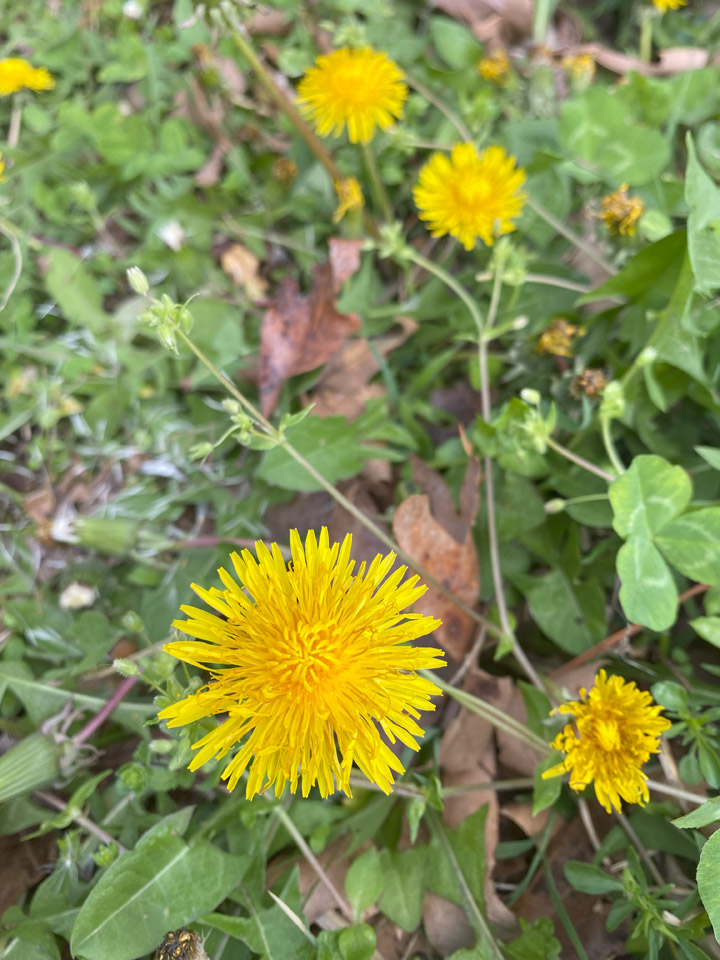
Dandelion (Taraxacum officinale) blooming in my backyard. Classified as edible by the Missouri Department of Conservation (MDC). Traditionally Dandelion has been used as a blood cleanser, to support blood sugar levels, liver function, and heart health. It is an antioxidant, anti-inflammatory, cholesterol management, blood pressure management, and is also known for having anticancer effects. Dandelion has antimicrobial and antiviral properties, supports immune function and is an excellent source of vitamins A, B, C, K, E, and folate.
Dandelion greens provide iron, calcium, magnesium, and potassium.
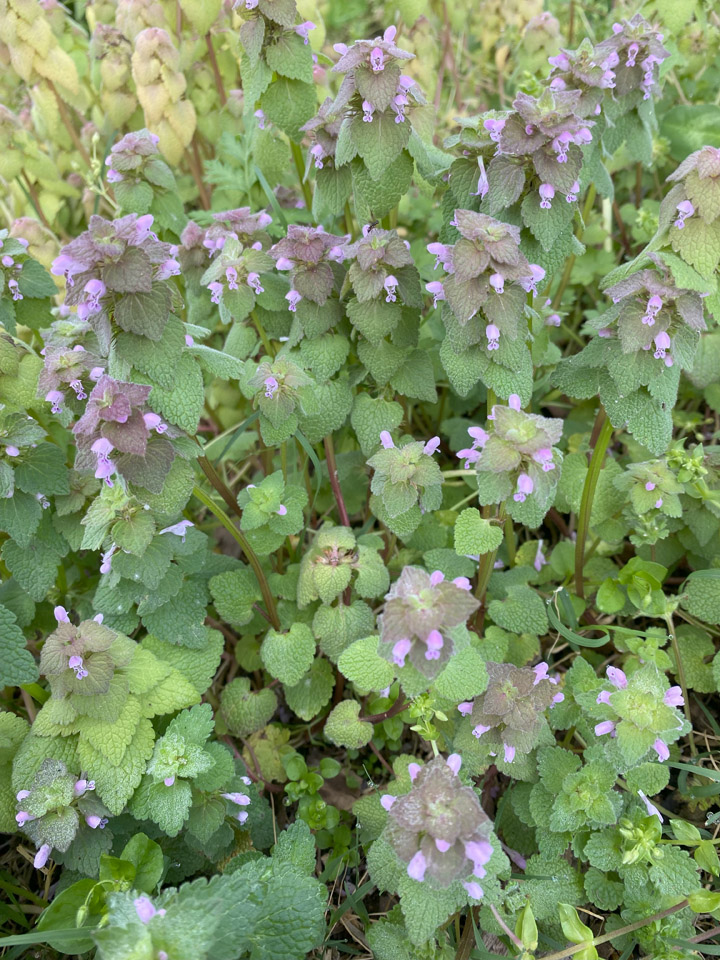
Dead Nettle, aka Red Dead Nettle, Purple Dead Nettle, Purple Archangel (Lamium purpureum.) Traditionally this plant has been used to stop bleeding, as a diuretic, to help with kidney stones, seasonal allergies, and it is an energy booster.
Dead Nettle is high in vitamin C, iron, fiber, and antioxidants.
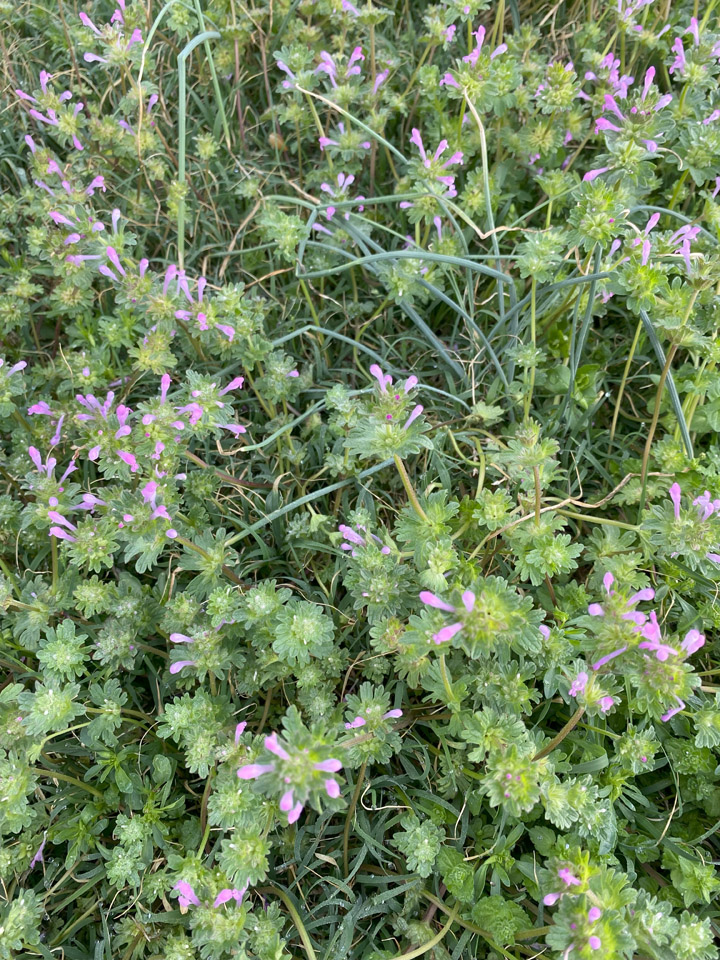
Henbit (Lamium amplexicaule) is closely related to Dead Nettle. Both are in the mint (Lamiaceae) family. However, as with many plants in the mint category, neither Henbit nor Dead Nettle have a “minty” flavor or fragrance. MDC categorizes Henbit as edible, and it has traditionally been used for its anti-rheumatic and anti-inflammatory properties, relieving chronic pain, soreness, and stiffness.
It’s high in iron, magnesium, manganese, calcium, and vitamins A, C, E, and K, as well as a whole host of beneficial antioxidants and phytochemicals.
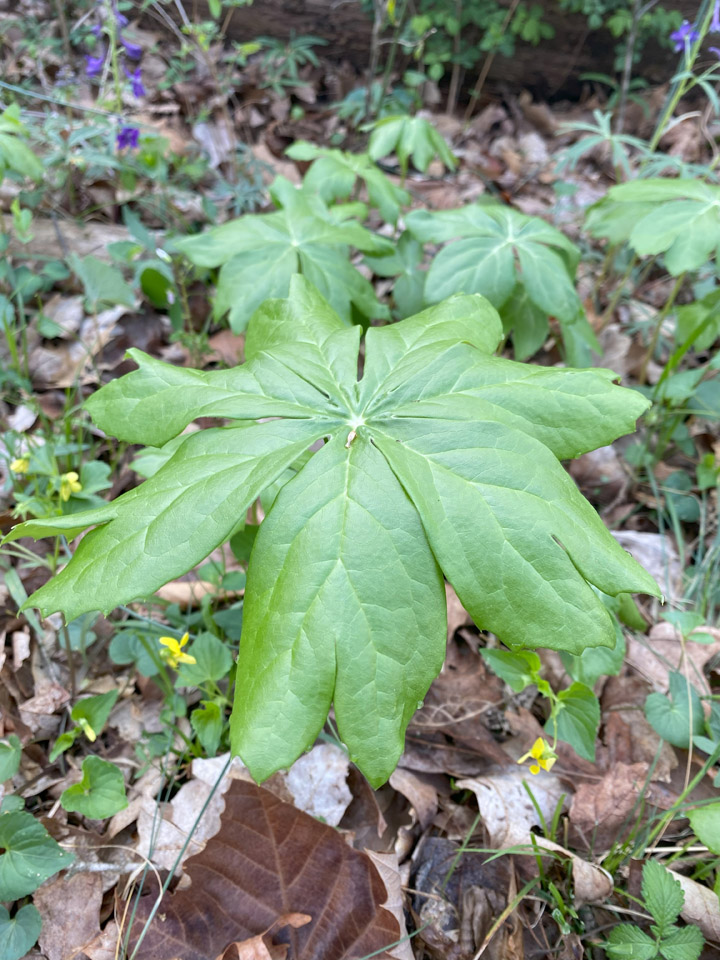
Mayapple, aka American Mandrake (Podophyllum peltatum) has a unique look and is native to North America. The leaves, stems, and roots are poisonous but have medicinal use, with one derivative used as a treatment for cancer. The fully ripe fruits are edible with a pleasant taste and can be eaten raw or made into beverages, jellies, and preserves. Mayapple fruits were an important food for Native Americans.
It has been traditionally used as a purgative, emetic, liver cleanser, worm expellant, and for treating jaundice, constipation, hepatitis, fevers, and syphilis.
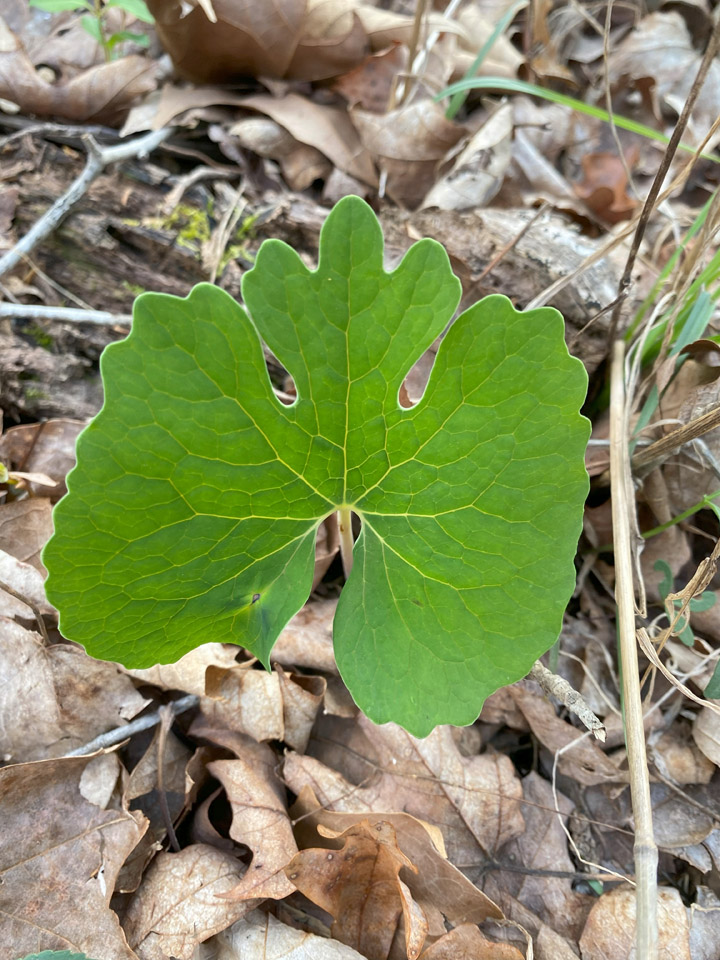
Bloodroot (Sangquinaria canadensis) is a perennial flowering herb (though not in bloom in this picture) native to eastern North America. It has been traditionally used for inflammation, cough, infections, dental health, heart conditions, and for some cancer treatments. Native Americans used the sap of Bloodroot for dyes, and the rootstock has been used medicinally for its antiseptic and emetic properties.
Though the sap can irritate the skin, it has been used for treating warts and skin cancers.
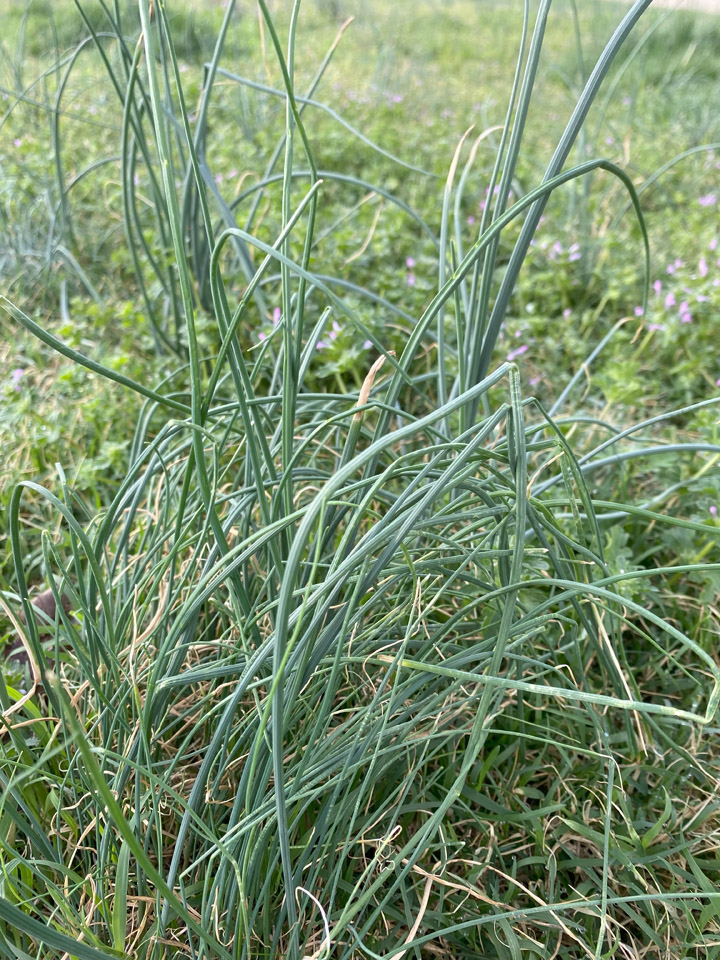
Wild Garlic (Allium vineale) grows just about everywhere in my lawn and has lots of traditional uses. It is anti-asthmatic, a blood purifier, diuretic, expectorant, hypotensive, and is a vasodilator. The raw root can be eaten to reduce blood pressure and ease shortness of breath.
When added to a regular diet Wild Garlic can help with cholesterol levels, act as a tonic to the digestive system and support the circulatory system.
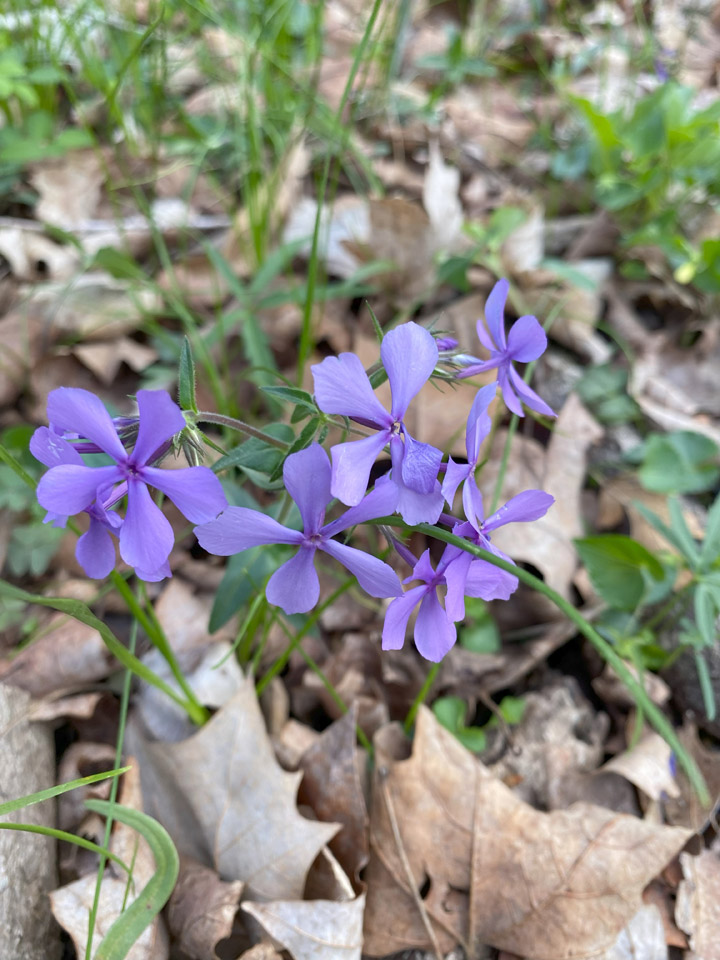
Wild Blue Phlox, aka Sweet William, Woodland Phlox (Phlox divaricate) pops up every spring on my gravel road and in my back yard. This sweet-smelling flower can be made into a tea and was traditionally used for treating stomach and intestinal disorders.
It is also believed to be a blood purifier, good for treating boils and eczema. The roots can be steeped and used as an eyewash.
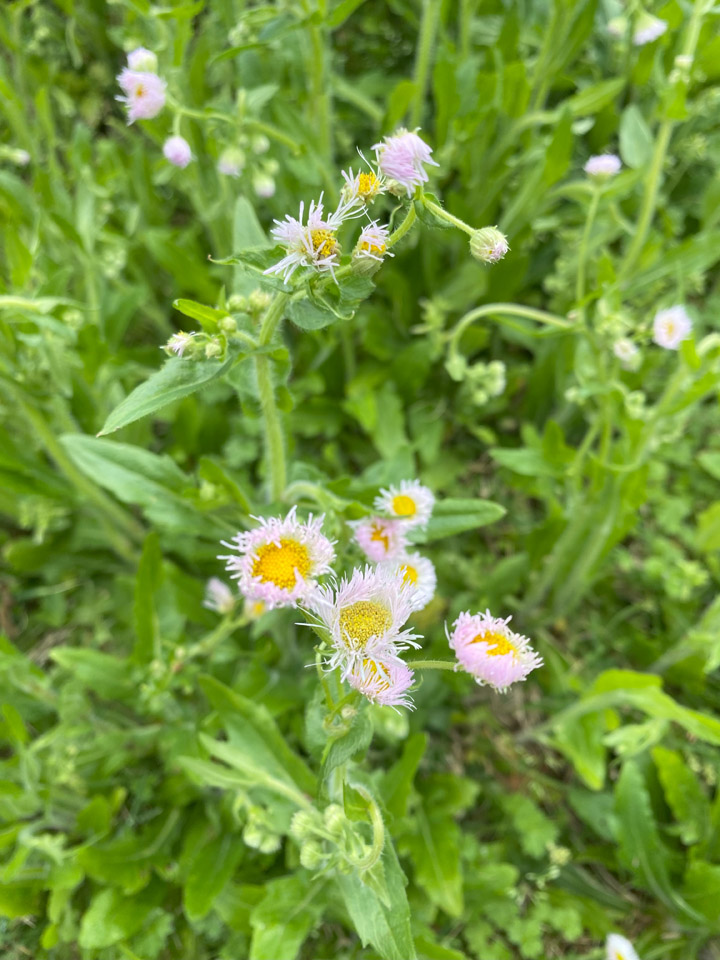
Philadelphia Fleabane (Erigeron philadelphicus) is in the daisy family (Asteraceae) and has traditionally been used for colds, chronic diarrhea, gout, epilepsy, menstrual issues, headaches, wound healing, and has been reported to reduce excessive bleeding following childbirth.
It is also considered to be astringent, diaphoretic, diuretic and emmenagogue.
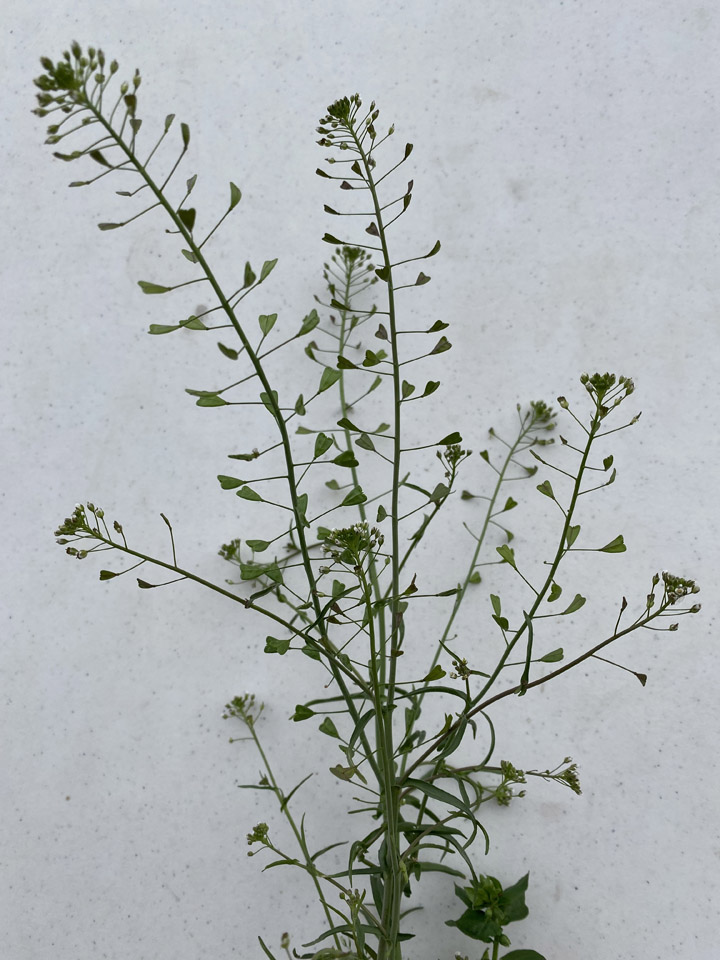
Shepherd’s Purse (Capsella bursa-pastoris) is an edible plant with small heart-shaped fruits. Traditionally used to treat dysentery, furuncle, gonorrhea, menstrual disorders, fever, nosebleeds, PMS, wound healing, and low blood pressure.
It has also been reported to stimulate uterine contractions and help stop postpartum bleeding. Shepherd’s Purse is rich in vitamin C.
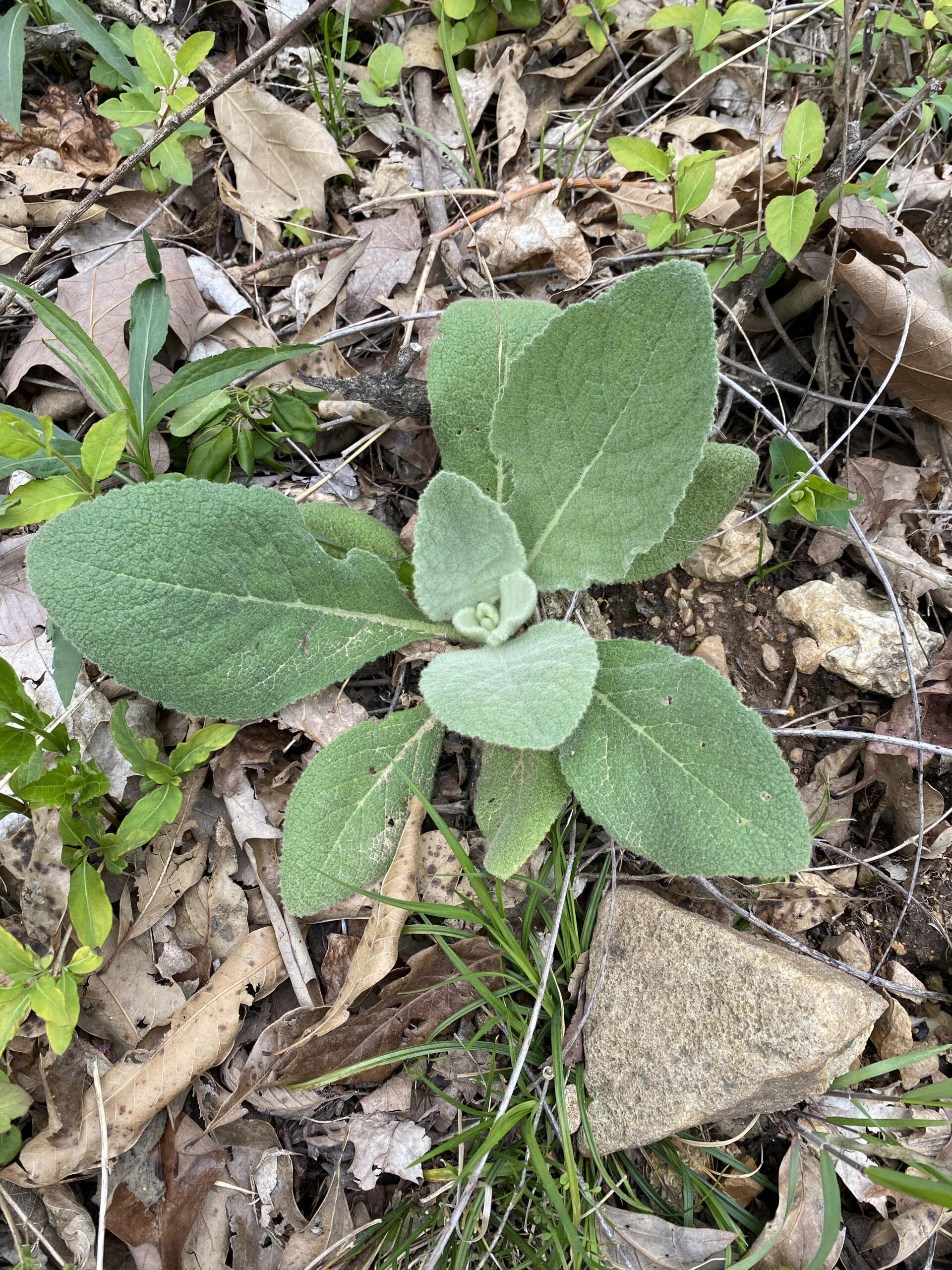
Mullein (Verbascum thapsus) For millennia Europeans have used mullein to treat lung, skin, and digestive problems. Native Americans quickly grasped its medicinal value and also smoked it.
The flowers yield yellow or green dye. The stalks, with wax or oil, can be used as torches. The leaves have been used for diapers and shoe insoles.
In addition to the plants pictured above, I also found Clover (both red and white), Missouri Violet, Dwarf Larkspur, Rough-Fruited Buttercup, Hemlock, Autumn Olive, and Butterweed in my back yard, just to name a few. What a variety right outside my back door… and most of them are so useful! If I walk even just a few feet further from my yard, I can find hundreds of other helpful species that could address nearly any health issue imaginable.
It would be worth our while to learn about what is growing around us. Do some research into the plants that are growing in your backyard. If you live in a fairly natural setting, chances are there are dozens of species that would benefit you, growing just feet away. If you don’t live in a rural area, take a day trip to a state park, or some natural scenery that is relatively close to you. If you decide to try any plants for their health benefits, be sure you are certain as to the identity of the plants, and that they are taken from a clean environment free from insecticides and synthetic fertilizers. Learn what parts of the plant may be edible or not edible, and how much of the plant material is appropriate for you to apply or ingest. Do some research online through trusted websites and in botany books about the plants that grow nearby. Glean the wisdom from those who have been living amongst the plants and learning their ways.
Written material may be important for gaining a basic understanding of various vegetation, but it is also possible to learn directly from the plants. Some of the greatest botanists, such as George Washington Carver and Luther Burbank, were reported to have spoken to the plants themselves to discover their hidden treasures (“Ask the plants of the earth, and they will teach you.” – Job 12:8.) There are countless little gems of vitality just hiding in so many of the plants that we pass by every day.
Sometimes it just takes a little conscious effort on our part to realize how much we really have close to home. I am thankful for the multitude of ways that God has always provided everything that I need, including the plants that grow right in my own backyard.
But my God shall supply all your needs according to His riches in glory by Christ Jesus.Philippians 4:19
Upcoming Care Events

Advanced Bible Oils:
Sunday, July 21, 8:30 a.m. – 6:00 p.m.
Sunday, July 21, 8:30 a.m. – 6:00 p.m.
CCI Summit 2024:
Monday, July 22, 8:30 a.m. – 6:00 p.m.
Tuesday, July 23, 8:30 a.m. – 6:00 p.m.
Wednesday, July 24, 8:00 a.m. – 12:00 p.m.
Monday, July 22, 8:30 a.m. – 6:00 p.m.
Tuesday, July 23, 8:30 a.m. – 6:00 p.m.
Wednesday, July 24, 8:00 a.m. – 12:00 p.m.
This year CARE’s Advanced Bible Oils and CCI Summit will take place at the Crystal Inn Hotel & Suites in Salt Lake City, Utah following Young Living Convention!
Advanced Bible Oils (open to all) is taught by Anthony Stewart, FCCI and is a wonderful in-depth review of essential oils and practices of the ancient Hebrews and early Christians in scripture. We will also discuss the rich history of the Bible and learn how to study scripture in such a way that it will enrich your experience. We will go through the entire History of Anointing and Laying on of Hands (HAL; formerly Healing Oils of the Bible) class as presented by CARE along with Q and A. One of the focal points of this class is to educate CARE Instructors on how to teach HAL, but there is much more information presented that is useful to anyone who has an interest in the Bible and essential oils.
Part of the class’s intent is to introduce unusual situations in which you may find yourself when teaching HAL. For example, you may have attendees who are not of a Judeo-Christian heritage, and who do not consider the Hebrew Bible (Old Testament) and/or the New Testament their scriptures, which can be challenging. A brief description of many religions will be given along with what to expect. We will also look at the history of the Bible, and how it developed over the millennia into its present form, among many other fascinating topics!
Advanced Bible Oils is required for all new CCIs who have not yet taken this class. CARE Interns (CIs) are welcome to attend and fulfill this requirement before becoming a CCI. This class is also open to the public upon registration. It is recommended, but not required, that participants complete CARE’s History of Anointing and Laying on of Hands before attending.
Repeat students of Advanced Bible Oils may attend at half price.
Advanced Bible Oils is approved for 8 CE Hours through NCBTMB.
CCI Summit (must be a CI, CCI or above to be eligible) is open to all CCIs and above, and also CARE Interns. Summit is a time for us to gather together to learn, grow, discuss, network, make new friends and reconnect with old friends. We will have special speakers, hands-on experiences, check each other’s Raindrop and Vitaflex skills, learn how to relate with students, and more.
Summit & Bible Oils Pricing:
Advanced Bible Oils (open to all):
$285 First time students
$142.50 Students repeating this class
$285 First time students
$142.50 Students repeating this class
Summit 2024 (must be a CI, CCI or above to be eligible):
$325 Early bird special, by May 1
$350 Registration May 1 and after
$325 Early bird special, by May 1
$350 Registration May 1 and after
Four Ways to Register:
Online:
Call: (573) 238-4846
Email: accounting@raindroptraining.com, request invoice for Summit and/or Advanced Bible Oils Class
Snail Mail: Send check or money order along with your name, address, phone, and e-mail address, stating what you are registering for, to: CARE, 12923 BCR 800. Marble Hill MO 63764.
Location for Both Events:
Crystal Inn Hotel & Suites Salt Lake City
230 W 500 S
Salt Lake City, UT 84101 USA
Crystal Inn Hotel & Suites Salt Lake City
230 W 500 S
Salt Lake City, UT 84101 USA

Health Tip:
from Lora Lee Stewart, FCCI
Long COVID is now connected to Adrenal Fatigue!
Tips on how to reverse Long COVID and Adrenal Fatigue!
How many of you know someone who has been diagnosed with “Long COVID?” It’s becoming more common, but recently a paper published in the medical journal, “Nature Reviews Endocrinology,” has revealed insights into the role adrenal insufficiency plays in the development and persistence of long COVID. The researchers write: “The symptoms of long COVID and chronic adrenal insufficiency have striking similarities. Therefore, we hope to raise awareness of assessing adrenal function in patients with long COVID.”
Adrenal Fatigue is notably caused by systematic stress, toxicity, inflammation, and depletion of our vital force (our “chi” energy). Persistent stress can cause imbalances in the hypothalamus pituitary adrenal axis, resulting in less sensitivity to stress hormones. If you’re experiencing feelings of extreme fatigue, sleep disturbances that leave you feeling wired and tired, anxiety- if you’re not able to relax or are having immune issues or struggling with weight gain, then you most likely have Adrenal Fatigue! It is well-known that in the early 19th and 20th centuries, doctors prescribed “Neutral Baths” as an important sedative therapy for institutionalized, emotionally agitated individuals. Society today is unrelenting in its emotional and physical stresses! A “neutral bath” would be an excellent therapy to help reduce stress, inflammation, and adrenal fatigue, thereby helping to improve long COVID. Here is the precise procedure of taking a “neutral bath.” (NOTE: These procedures MUST be followed exactly!) (This information is obtained from NaturalHealthScience.com.)

NEUTRAL BATH:
- In a pre-warmed bathroom, fill the tub with water at a temperature between 94o F. to 98o F. (34o C. to 37o C.) until water covers bather to neck-level. The first few times you take this bath, you will need a thermometer to manage this bath properly. Once you have experience with it, you can dispense with the thermometer and manage it purely by feel.
- The water temperature must be maintained at above set out temperature which is approximately skin temperature. This balance between skin- and water-temperatures leads to decreased sensitivity of the temperature-sensing nerves of the skin. There must be no body-rubbing or impact of water upon skin (as occurs during showering). These two measures ensure that the nerve-endings of the skin are deprived of stimulation. In this way, the nervous system is given a rest and allowed to rebuild its reserves.
- Duration of bath is also an important factor as the full relaxant effect takes time to develop and mature. The Neutral Bath generally lasts from 20 minutes to 45 minutes. In general, 30 minutes may prove to be a sufficient duration for most people. Don’t overdo this procedure. If the duration of the bath goes beyond 45 minutes, it may become depleting.
- While in the bathtub, the room lighting should be kept low; noise and other interruptions should be controlled. Also, the bather should lie relatively still, using a folded towel placed to support head and neck. If bather needs to shift position, this should be done slowly while avoiding any stimulating body-rubbing.
- Be sure not to fall asleep in the tub and be careful while exiting the tub.
- After stepping out of the tub, be sure to step only on a warm bathmat. Do not step onto a cold floor as this will interfere with temperature-related effects of the Neutral Bath. Pat dry only. Do not rub dry. Rubbing will awaken the nerves quieted by the action of the Neutral-Bath.
- After drying, dress comfortably and warmly and rest for at least 1 hour before resuming activity or eating.
If you’d like to enhance your experience and help your body draw out toxins, as well as obtain support for your adrenal function, you may mix some essential oils with some unrefined sea salts. You will need 1 teaspoon of unrefined sea salt and only 9 drops total of essential oils. (You may use 2 to 4 essential oils, however, use only 9 drops total!) Below are some essential oils you can use, and most can be obtained from Young Living Essential Oils (contact your nearest Young Living distributor or CARE for more information about how to obtain these awesome oils!).
- Carrot seed (Daucus carota)—eases fluid retention; reduces muscular tension; counteracts low blood pressure and anemia; balances endocrine system.
- Clary sage (Salvia sclarea)—eases muscle-aches, pains and spasms; balances adrenal glands; antidepressant; aids in drug withdrawal; dream enhancer.
- Lavender (Lavendula vera)—antispasmodic, sedative, harmonizing, sedative (brain and central nervous system); aids deep meditation; cleanses and soothe the spirit; balances blood pressure and circulation; counteracts low blood sugar; antidepressant; calms emotional extremes.
- Spikenard (Nardostachys jatamansi)—balances heart action, hypothalamus and autonomic nervous system.
- Bitter orange (Citrus aurantium)—balances nervous system; supports the anterior pituitary gland; promotes good circulation, warms the body;
- Ylang ylang (Cananga adorata)—adrenal relaxant; sedative; antidepressant; balances hormones.
There are also 5 adaptogenic herbs that have been found to be effective for adrenal support and overall cardiovascular health and stress management. (This information was located on the website: gaiaherbs.com.) Adaptogens are a category of herbs and mushrooms that help the body adapt to stress. They assist in regulating homeostasis via their actions on the hypothalamic pituitary adrenal (HPA) axis. They also control vital mediators of the stress response, such as heat shock proteins and stress hormones like cortisol and nitric oxide. Some adaptogens stimulate the body and enhance mental performance, while others help calm the body and soothe the adrenals. They can also support the body’s natural circadian rhythm (aka your internal clock) and help promote a more restful sleep. Below are the 5 recommended herbs for adrenal support:
- Ashwagandha, aka Indian Ginseng or Withania somnifera, is an ancient plant used extensively in Ayurveda (the traditional medicine of India) for over 3,000 years. Its traditional uses include stress; menstrual difficulties such as PMS or irregular periods; adrenal health; sleep; immunity; thyroid support; sex drive; energy; and cognitive function. In herbalism, Ashwagandha is considered a nervine, which supports the nervous system, and an adaptogen, which helps the body adapt to physical, mental, and emotional stress.
- Siberian Rhodiola Rosea: As an adrenal adaptogen, this herb supports the functioning of the adrenal glands and encourages a healthy stress response. It has been traditionally used in Siberia and across Asia for anemia, energy, fertility, immunity, mood, cognitive health, and low libido. Rhodiola has also demonstrated supportive effects on: Cardiovascular function, Cognitive and mental health, Endurance, Physical performance and Stress.
- Holy Basil, also known as Tulsi. Liquid Yoga, or the Incomparable One, translates to balance, symbolizing its most common modern use. Considered a sacred herb in Ayurveda, the traditional wellness practice of India, Holy Basil has been traditionally used to support the stress response, immunity, eye health, digestive complaints, insect bites, anxiety, hiccups, and back pain.
- Eleuthero, introduced initially to the United States as Siberian Ginseng until its name was changed in 2002 (Panax Ginseng is now considered the only “true” Ginseng per the FDA), is used extensively in Traditional Chinese Medicine to invigorate qi (chi or energy), strengthen and nourish the body, and to balance vital energy.Through Russian Research, Eleuthero became the model for all other adaptogens. It has demonstrated various beneficial properties, including: Supporting immunity, normal blood sugar and metabolism; promoting bacterial balancing; supporting normal inflammatory response; Promoting energy, endurance and cognitive protection.
- Regarded as a harmonizing tonic and a popular adaptogenic herb, Schisandra berries contain a blend of five distinct flavor properties, which correspond to the five phases or Elements of Traditional Chinese Medicine:
Sour (Wood)
Bitter (Fire)
Sweet (Earth)
Acrid (Metal)
Salty (Water)
Since these five flavors work synergistically to promote overall health and vitality, Schisandra is sometimes called the “ultimate superberry.” Schisandra berries have been shown to enhance the body’s natural resistance and adaptation to stressful influences; support mental endurance and cognitive health; promote normal immunity; support the central nervous system function, which is foundational to stress support; promote healthy circulation when combined with Sesamin, a component of sesame seeds; and support thyroid health.

In summary, anyone suffering from Long COVID can have hope that their suffering CAN come to an end! There are natural herbs, oils and protocols available to assist your body in coming back into harmonic health and balance! I hope that you share this information with as many as you can! Please contact us at care@raindroptraining.com or call us toll free at: (800) 758-8629. Here’s to your health!
Supervisor Training for CCIs
Supervisor Training for CCIs – May 3-5, 2024
This will be an online “virtual” training through Zoom
Instructor: Anthony Stewart, FCCI
ELIGIBILITY: Must be a CCI or above to register.
WORKSHOP FEE: The fee for the Workshop is $800 payable to CARE. Half price for repeat students. Current Supervisors who would like to audit the class and not fully participate may do so for $150. Registration may be by emailing accounting@raindroptraining.com and requesting an invoice. Please cc anthony@raindroptraining.com. You may also register by mailing a check to CARE Supervisor Training, 12923 BCR 800, Marble Hill, MO, 63764.
SCCI REQUIREMENTS: Requirements for becoming an SCCI, with a description of SCCI Privileges, are on pp. 30-31 of the CCI Handbook (21st ed). One must have taught at least four Basic Sets to be eligible to become an SCCI, but one may take the SCCI Workshop before having completed the four Sets. Only CCIs and above may take the Workshop. CIs are not eligible.
THE SUPERVISOR’S MANUAL: Participants must have purchased a CARE Supervisors Manual prior to class and will be using this during each online session. They are $95.00 plus $14 s/h. You will need to call CARE at (800) 758-8629 and order by phone with a credit card or email accounting@raindroptraining.com. The Supervisor’s Manual is not available through the website.
PRE-WORKSHOP ASSIGNMENT: The pre-workshop assignment is to get a copy of the Return Demo Form (which may be downloaded from the website when you log in as a CCI) and view the CARE Vitaflex and Raindrop DVDs, critiquing the instructor’s performance as if they were a CCI Candidate and you are the Examiner. Your completed Ret Demo forms are to be brought to the Workshop where they will be presented and discussed, and whether a grade of Pass, Fail, or Facilitator Only shall be given. This form can be downloaded by logging into to your instructor profile at raindroptraining.com > Click Member Portal > Click Instructors & Facilitators Only > Click on the purple Certified CARE Instructor button > Click on Return Demo Checklist.
COURSE CONTENT: All aspects of Supervising will be reviewed, including Examinations for Return Demonstrations, Supervising Assistantship Classes, Mentoring CCI Candidates, Proctoring Internship Classes, as well as Observing Emotional Release and Chemistry Classes for candidates seeking authorization for these subjects.
GENERAL DAILY SCHEDULE: Students will typically meet with the instructor via Zoom at 9:00 a.m. Central US Time for approximately one hour in the mornings, after which students will have homework to complete before meeting again at 3:00 p.m. Central US Time. The afternoon session will last approximately two hours. There may be more time spent online than this, particularly on the last day of the training. However, we will adjourn from class at noon on Sunday, which is the last day. Daily schedule is subject to change. You will need to set aside all three days to being present online and completing assignments during the day.
REGISTRATION: Register with CARE. See “Workshop Fee” above, or Click Here to Register Online.
NOTE ON CERTIFICATES: Students attending for the first time will receive a certificate for 20 CE hours. Repeat students have the option to receive a certificate for an additional $10 by making a request to CARE. Students who are only auditing the class will not receive certificates since they will not be fully participating in this workshop. Continuing Education Hours are through NCBTMB.
Raindrop Messenger Featured Book

Killing Cancer Not People
$22.95
Killing Cancer Not People by Robert G. Wright This no-nonsense book tells it like it is, that there are numerous non-toxic alternative cures for cancer that work, but are vigorously repressed, if not classified as outright “illegal,” by the FDA, the AMA, and the American Cancer Association in cooperation with the big pharmaceutical companies who…
Featured Instructor: Tammy Struebing, LCCI

It’s been an honor and a privilege to be a part of the CARE program through the years. In February 2005, David Stewart (CARE co-founder) proctored my first CARE Intensive in Omaha, Nebraska. That weekend, he shared insights that forever changed my perspective about life. His wisdom and knowledge never ceased to amaze me. He treated me like I was special; later I realized he treated everyone like they were special!
In March 2007, I traveled with David to Dr. Sabina DeVita’s school in Toronto, Canada where he had been teaching chemistry. He had asked me to take over his classes there. It was another special weekend with David, Sabina and other students. In May 2007, I traveled with David and Lee Stewart and four other CARE instructors to Gary Young’s clinic in Ecuador – to learn Gary’s latest version of raindrop. It was a most memorable week – to include being taught by Gary in-person and touring the farm!
Today, I love teaching CARE intensives and spending time with my students. It’s a spiritual experience and truly rewarding to share with those who are seeking to learn and grow. And through my CARE/Young Living journey, I’ve met individuals who have become lifelong friends. Marie Koepke, fellow CARE Instructor, is one of them.
I live with my husband, Arthur, in Albion, Nebraska. We have four children who live with their families in Omaha and a son who lives in Columbus, OH. They are all well aware of my passion for making wholistic choices. I offer Emotional Release, Raindrop, Vitaflex and other wholistic services at my business, Olive Branch Healing Arts. I love to listen to truther podcasts. And I truly “innerstand” that it’s an amazing time to be alive and witness the global awakening that is currently underway. I travel out-of-state frequently to attend spiritually enlightening workshops. I am returning to St. Paul, MN to teach another CARE Intensive (April 26th – 28th) and look forward to this special weekend with my students. Some of my favorite YL essential oils are Frankincense, Transformation, Sacred Mountain, Egyptian Gold and Divine Release (to name a few.)
Today, it’s truly a blessing to know and connect with Anthony Stewart, CARE Executive Director, and Lora Lee Stewart, CARE Board Member. I appreciate them both very much. Their parents would be very proud of them – for carrying on the CARE legacy and shining their light with grace!
THE RAINDROP MESSENGER
Official Newsletter of CARE
The Center for Aromatherapy Research and Education
12835 BCR 800, Marble Hill, Missouri USA 63764
(573) 238-4846
Official Newsletter of CARE
The Center for Aromatherapy Research and Education
12835 BCR 800, Marble Hill, Missouri USA 63764
(573) 238-4846
NOTE: The information in this newsletter is intended for education purposes only. It is not provided in order to diagnose, prescribe, or treat any disease, illness, or injured condition of the body or mind. Anyone suffering from any disease, illness, or injury should consult with a physician or other appropriate licensed health care professional.
The Point of Power: Making Changes in the Here and Now

Please feel free to share this newsletter!
In this issue of the Raindrop Messenger:

By Anthony Stewart, FCCI, Executive Director
The Point of Power:
Making Changes in the Here and Now
“The point of power is in the present moment.” (Louise Hay, from “Heal Your Body”). What a simple, profound, and liberating thought! In her book, Louise Hay goes on to say, “It doesn’t matter how long we’ve had negative patterns, an illness, a rotten relationship, lack of finances, or self-hatred. We can begin to make a change today.”
It seems to be human nature to feel trapped by circumstances, negative feelings, bad habits, ill health, and emotions stemming from past trauma. People say things like, “That’s just the way I am,” or “That’s just the hand life has dealt me,” disbelieving that we are creatures of free will. Some folks carry around trauma and emotional baggage like a millstone around their neck and feel helpless to feel or do any differently. Have you ever had “If only ida” thoughts?
“If only ida been born into different circumstances.”
“If only ida not had that bad thing happen to me.”
“If only ida married a different spouse.”
“If only ida been born to different parents.”
“If only ida made that investment or gone to that other school or chosen another career.”
“If only ida done this instead of that.”
“If only ida not had that bad thing happen to me.”
“If only ida married a different spouse.”
“If only ida been born to different parents.”
“If only ida made that investment or gone to that other school or chosen another career.”
“If only ida done this instead of that.”
And the list could go endlessly on. “If only ida” thinking is living in the past where we have no power. Our past is not sitting in our memory bank to endlessly torture us leading to despair. It is there to help teach us something new. The past I’m speaking of could be from forty years back or five minutes ago. It now only exists in our memory. All we have now is the present moment, and it is there that we have the power to mend and change things. Holding onto and focusing on whatever past we may have, be it far away in time or very recent, is only holding us back from our full potential as a child of God. Through the prophet Isaiah, God said, “Remember ye not the former things, neither consider the things of old. Behold, I will do a new thing; now it shall spring forth; shall ye not know it? I will even make a way in the wilderness, and rivers in the desert.” (Isaiah 43:18-19)
The negative traits that we once identified with, the bitter feelings, the character flaws, the toxic relationships – all that stuff is taking up space in our consciousness. And that space could be used for something much better. That’s why we have the divine calling to remove the former things from our consciousness. Release it! And make room for the “new thing” that God is doing.
How do we make that emotional, mental, and spiritual shift? It all starts with a desire to do so. When that desire becomes strong enough, the way appears. It is also important to realize that in this world there is no such thing as something for nothing. In order to gain the happiness, peace of mind, abundance, harmony, balance, freedom, etc., think deeply about what you are willing to give in exchange. If we seek personal and spiritual growth, are we willing to exchange the trauma that is inhibiting that growth? If we seek a sense of real connectedness, are we willing to hand over bitterness? Would we exchange our unforgiving heart for the ability to forgive someone?
… give unto them beauty for ashes,Isaiah 60:3
the oil of joy for mourning,
the garment of praise for the spirit of heaviness.
And so it goes that after we have that strong desire to change our consciousness, the next step is to have an attitude of willingness. Many people have a desire for something better but are not willing to take the necessary steps to attain the coveted result. Remaining the way we are, or the way we have always been (“That’s just the way I am”), is a personal choice and an exercise of free will. Likewise, taking advantage of the power in the present moment to begin the process of growth is also a personal choice. Remember, the point of power is in the present moment, right here, right now. We can use that power to begin the process of making positive and productive changes, or we can use that power by choosing to remain the same.
Keep in mind, that if we are choosing to use the power of the present moment to make significant changes, that doesn’t always mean that the desired results will be immediate (though sometimes they are). Though the past is gone, its consequences reverberate out into the present like ripples from a pebble thrown in a pond. It may take personal effort in many present moments to create the reality we seek. The key is to keep on creating positive changes in each present moment, even when results aren’t immediately apparent. When you turn on water through a long water hose, it may not flow with water for a minute or more. It will have gushes of water, then air, water, air… for a long time. But keep the source of water moving through the hose, and eventually it will be an even flowing stream.
If you are remodeling your home, it doesn’t happen simply by wishing for it. First, we may have to remove lots of things from the house, throw away some items perhaps that are no longer relevant. We would need to take the time to peel off that 70’s print wallpaper (unless you still like it), remove old carpet, repair broken boards, repaint, put in new floors, and then fill the home with new items that you now choose, and maybe keep some of the old items that are precious to you. And this all takes time. But the time is in the now. What good would it do us to sit and look at the ugly wallpaper, or the stained carpet and just say to ourselves, “I really wish I hadn’t spilled coffee on the carpet, and why did the dog have to poop right there? And I wish that my parents hadn’t put up that ugly wallpaper when they lived here.” This type of thinking would be completely futile.
And so it is with ourselves. We will never wish it away. We can’t change the past where we are powerless. But we can make choices and take action in the present moment. And that’s where the point of power will always be. And what a blessing that we have the additional power that essential oils bring to the table. We even have a blend called Present Time created by Gary Young!
So… “Remember ye not the former things, neither consider the things of old. Behold, I will do a new thing; now it shall spring forth; shall ye not know it? I will even make a way in the wilderness, and rivers in the desert.”
As spring ushers in new birth, new creation, and a fresh start, let’s each one take part in the power of the present moment with which God has blessed us, and watch your new growth spring forth like a budding tree in the new season.
Upcoming Care Events

Advanced Bible Oils:
Sunday, July 21, 8:30 a.m. – 6:00 p.m.
Sunday, July 21, 8:30 a.m. – 6:00 p.m.
CCI Summit 2024:
Monday, July 22, 8:30 a.m. – 6:00 p.m.
Tuesday, July 23, 8:30 a.m. – 6:00 p.m.
Wednesday, July 24, 8:00 a.m. – 12:00 p.m.
Monday, July 22, 8:30 a.m. – 6:00 p.m.
Tuesday, July 23, 8:30 a.m. – 6:00 p.m.
Wednesday, July 24, 8:00 a.m. – 12:00 p.m.
This year CARE’s Advanced Bible Oils and CCI Summit will take place at the Crystal Inn Hotel & Suites in Salt Lake City, Utah following Young Living Convention!
Advanced Bible Oils (open to all) is taught by Anthony Stewart, FCCI and is a wonderful in-depth review of essential oils and practices of the ancient Hebrews and early Christians in scripture. We will also discuss the rich history of the Bible and learn how to study scripture in such a way that it will enrich your experience. We will go through the entire History of Anointing and Laying on of Hands (HAL; formerly Healing Oils of the Bible) class as presented by CARE along with Q and A. One of the focal points of this class is to educate CARE Instructors on how to teach HAL, but there is much more information presented that is useful to anyone who has an interest in the Bible and essential oils.
Part of the class’s intent is to introduce unusual situations in which you may find yourself when teaching HAL. For example, you may have attendees who are not of a Judeo-Christian heritage, and who do not consider the Hebrew Bible (Old Testament) and/or the New Testament their scriptures, which can be challenging. A brief description of many religions will be given along with what to expect. We will also look at the history of the Bible, and how it developed over the millennia into its present form, among many other fascinating topics!
Advanced Bible Oils is required for all new CCIs who have not yet taken this class. CARE Interns (CIs) are welcome to attend and fulfill this requirement before becoming a CCI. This class is also open to the public upon registration. It is recommended, but not required, that participants complete CARE’s History of Anointing and Laying on of Hands before attending.
Repeat students of Advanced Bible Oils may attend at half price.
Advanced Bible Oils is approved for 8 CE Hours through NCBTMB.
CCI Summit (must be a CI, CCI or above to be eligible) is open to all CCIs and above, and also CARE Interns. Summit is a time for us to gather together to learn, grow, discuss, network, make new friends and reconnect with old friends. We will have special speakers, hands-on experiences, check each other’s Raindrop and Vitaflex skills, learn how to relate with students, and more.
Summit & Bible Oils Pricing:
Advanced Bible Oils (open to all):
$285 First time students
$142.50 Students repeating this class
$285 First time students
$142.50 Students repeating this class
Summit 2024 (must be a CI, CCI or above to be eligible):
$325 Early bird special, by May 1
$350 Registration May 1 and after
$325 Early bird special, by May 1
$350 Registration May 1 and after
Four Ways to Register:
Online:
Call: (573) 238-4846
Email: accounting@raindroptraining.com, request invoice for Summit and/or Advanced Bible Oils Class
Snail Mail: Send check or money order along with your name, address, phone, and e-mail address, stating what you are registering for, to: CARE, 12923 BCR 800. Marble Hill MO 63764.
Location for Both Events:
Crystal Inn Hotel & Suites Salt Lake City
230 W 500 S
Salt Lake City, UT 84101 USA
Crystal Inn Hotel & Suites Salt Lake City
230 W 500 S
Salt Lake City, UT 84101 USA

By David Stewart, PhD,
Founder of CARE International
Founder of CARE International
Leaves of Clover
This article is excerpted from two booklets written by Dr. Stewart. The first was written in 1997 entitled “Are You Looking Over a Four-Leaf Clover? How to Grow Your Own”, and the second was written in 2001 entitled “Leaves of Clover”. Neither booklet is currently in print.
The heavens are telling the glory of God; and the firmament proclaims his handiwork. Day to day pours forth speech, and night to night declares knowledge. There is no speech, nor are there words; their voice is not heard; yet their voice goes out through all the earth, and their words to the end of the world.Psalm 19:1-4

The first to apply clover as an illustration of scriptural truth was St. Patrick more than seventeen centuries ago. Contrary to what you may have heard, St. Patrick was not an Irishman by blood nor by birth. Born in Scotland in 389 A.D., His mother was British and his father a Roman. At age sixteen he was kidnapped by Irish bandits and spent the next six years in slavery as a shepherd. A spiritual vision instructed him to escape and become a priest, which he did. He fled to Gaul (France) where he was educated and ordained. Having learned the language of the Irish aborigines while he was a slave, the pope assigned him to Ireland, the land of his bondage.
Faced with the daunting task of teaching Christianity to primitive, warlike tribes with no written language, he had to find simple ways to convey the teachings of Jesus to which they could relate. The concept of the Trinity was hard to communicate. Trying to explain how one God could be three, one day he picked up a clover leaf. Pointing to the three leaflets, he said, “See there are three,” and then pointing to the stem he added, “But there is only one source. This is how God can be a Father, a Son and a Holy Ghost at the same time and still be one God.”
Before St. Pat died in 461 A.D. he had thoroughly established Christianity throughout the island. Legend also credits him with driving all the snakes out of Ireland.
Shamrocks, Clovers and the Luck o’ the Irish
Shamrock is an old Irish word for clover both white (Trifolium repens) and yellow (Trifolium dubium). In Ireland the term shamrock also applies to wood-sorrel (Oxalis acetosella) which is also a three-leaved plant resembling clover. The shamrock is the national emblem of Ireland and St. Patrick is their patron saint. Clovers and shamrocks of all kinds are symbols of the “Luck o’ the Irish.”
Sometimes shamrocks and clover produce a fourth leaf. Four-leaf clovers are considered especially lucky, and you don’t have to be Irish to receive its benefits. To extend St. Pat’s allegory of the Holy Trinity in three leaves, we can say that when a fourth leaf is manifest, that is God’s grace. We can see that four leaves symbolize the cross, whereby God’s salvation was given to the world through Jesus. Hence, what the ancient people of Ireland considered to be “luck,” Christians would consider to be “grace.”
Are You a Natural Four-Leaf Finder?
In doing many informal surveys, I discovered that about two-thirds of the people have found at least one four-leaf clover in their lifetime. At the same time, approximately one person in three has never found a four-leaf clover in their entire life, and some have never even seen one. At the other extreme, while most people have found at least one four-leaf clover sometime in their life, there are some who find them all the time.
If you are one of those who frequently finds four-leaf clovers, even when you aren’t looking for them, then you are a natural four-leaf clover finder. You may just be running down to the mailbox, crossing a grassy strip in a mall parking lot, or taking a short-cut across someone’s lawn, when there, as big as day, will be a four-leaf clover poking its head through the grass smiling at you, like God’s grace, when you least expect it. Such people represent only 4% of the population or only one in twenty-five.
Why is it that some people find four-leaf clovers and some don’t? The difference isn’t in the clovers. Clover has no favorites. It is the same for everyone, like God. The difference is in how people see the world. Some are attuned to seeing four-leaf clovers and some not, just as some people are attuned to seeing God in everything and some not.
He that hath an ear, let him hear what the Spirit saith.Revelation 2:7,11,17,29; 3:6,13,22
However, anyone who desires to do so can learn to spot four-leaf clovers. Likewise, anyone can learn to pray more effectively and more fully open their ears to hear, their eyes to see, and their hearts to receive more and more of God’s grace. The grace is free, but the ability to recognize and receive it is a matter of personal commitment, effort, and openness.
Ask, and it shall be given you; seek and ye shall find; knock, and it shall be opened unto you: For everyone who asks receives, and everyone who searches finds, and for everyone who knocks, the door will be opened.Matthew 7:7-8
Ye ask and receive not, because ye ask wrongly.James 4:3

People don’t find God because they don’t seek Him. And many want to find God, but don’t know how to seek Him. The same goes for finding four-leaf clovers.
Over the years, I have conducted a series of experiments on four-leaf clovers – an informal scientific study. I have gathered them from many places in my travels, grown them in pots and in flats, indoors and outdoors, in shade and in sunshine, in wet places and dry, in fertile soil and poor, in spring, summer, winter and fall.
In the process of my research endeavors, clovers have taught me many things, revealing their secrets. What I discovered is that finding four-leaf clovers is actually a learnable skill. Anyone interested can learn how. In fact, anyone interested can learn to grow their own. Four-leaf clovers are all around us, almost everywhere you go. But there are a few tricks to finding them.
Just as God’s grace and goodness surrounds us uninterruptedly, twenty-four hours a day, we may not be aware of His presence and may fail to receive the peace and joy and wisdom that is always there. However, those who have learned how to do it can turn their attention inward and upward in silent prayer and receive.
Clovers growing next to the sidewalk of David’s home, one of which is a four-leaf clover.
Be Still and know that I am God.Psalm 46:10
The trick is learning what it means to “be still.” The same is true of finding four-leaf clovers. You can be walking through a field of them and never know it if you aren’t looking for them, or, even when you are looking, you won’t find them if you don’t know how. Learning how to focus on four-leaf clovers leads to the ability to find them. Learning to find them requires learning about them and their ways.
Likewise, learning to focus on God leads to greater receptivity and awareness in sensing His Presence. And learning to find Him requires learning about Him and His ways.
Clover and the Golden Rule
The first step in learning to find four-leaf clovers is to learn how they grow, where they hang out, and what company they keep. Clover is a perennial low-growing herb of the family Leguminosae. It stands a foot tall or so in sown fields or lies an inch or so above ground in mown lawns. It is gregarious, likes the company of other clovers, and has no prejudice against other species – mixing well with weeds and grasses of all kinds.
As a Legume, it has the ability to fix gaseous nitrogen from the atmosphere and place it in the soil. All plants need nitrogen, but most can’t take their own directly from the air. Therefore, other species seek the company of clover as a neighbor to enjoy the nutrition it so generously contributes to the soil. All plants seem to like clover because it lives by the Golden Rule. (Matthew 7:12 or Luke 6:31) Clovers love their neighbors. In fact, notice the four middle letters of the word CLOVER. It spells “love.”
Love thy neighbor as thyself.Mark 12:31
The Odds of Finding a Four-Leaf Clover
Clover of all varieties has the generic name of “Trifolium,” which is Latin for “three leaves.” The vast majority of clovers are of the three-leaf kind. Quadrifoliate clover is a rare mutation of the norm. In my studies, I have sampled hundreds of lawns and fields, counting tens of thousands of clovers. Here is what I found.
Out of 1,000 stems of clover, 3 or 4 will bear four leaves. That is a rate of about 0.35% or one in 300. Out of 2,000 stems of clover, one may even bear five leaves. That is a rate of 0.05% or one in 2,000. However, to get those numbers you have to count tens of thousands of plants.
The reality is that if you choose a small patch of clover at random, say one-foot square, chances are nine out of ten you won’t find any plants with four leaves in that patch. Only one such patch in ten will contain any of the lucky varieties. But when you do find that one-in-ten patch, look again. There will probably be another four-leafer and, perhaps, several in the same area.
Four-leaf clovers grow in clusters – generally all from the same plant or from nearby offspring of the mother plant. So don’t just pick one four-leaf clover and move on or you’ll miss an opportunity to find several.
God’s grace is like that, too. We all go through periods of spiritual dryness but if we persist in our devotion, God often answers with a flood – having prepared the soil.
A good measure, pressed down, shaken together, running over, will be put into your lap.Luke 6:38
Clover Principles for Successful Living
This article is about clover as a plant, but mostly it is about clover as a teacher and illustrator of Biblical teachings. True success is not happenstance of chance. Finding four-leaf clovers is more of a skill than it is an accident. Success is choosing a right course and sticking with it. Luck is often part of success, and successful people seem to get more of it because they have learned to recognize, position themselves, and seize upon the serendipity of lucky opportunities when they come. But luck can be good or bad and life deals everyone a little of both. The difference is that successful people know how to deal with that, too.
We don’t count on the random whims of luck. We count on God’s grace where our part of the deal is to keep ourselves open and receptive to that grace.
In summary, then, here are fifteen principles we have learned from clover:
- Clovers represent the Trinity, the grace of God, the perfection of Christ, and the model of a humble servant.
- Clover lives by the Golden Rule; its middle name is love.
- Clovers are good neighbors, benefiting others by enriching the environment.
- Clovers are generous, providing food for anyone, bird or mammal, who passes by that is in need.
- Clovers are gregarious and friendly and enjoy the company of others.
- Clovers have no prejudices against others and are willing to associate in peace and harmony with those who are different from themselves.
- Clover plants are courageous visionaries who never stop reaching into new territory – always exploring the unknown.
- Clover is flexible and adaptable to ever-changing times and environments, willing to accommodate a wide variety of circumstances.
- Clover always does its best to flourish wherever God plants them – even in poor soil.
- Clover plants know how to remain new and youthful, even when old.
- Clovers are freedom lovers, will not accept confinement, and would rather die than compromise their principles.
- Clovers enact an annual Easter pageant for us illustrating the death and resurrection of Christ by appearing to die every winter and then reappearing with new life in each spring.
- Clovers are creatures of light, and do not dwell in darkness.
- Clovers teach us that the best way to keep your Christlike nature is to keep Christlike company.
- Clovers know the source of their strength and energy and acknowledge it by turning toward and communing with their source of life throughout each day without ceasing.
Clovers have their priorities in order, and, in their own way, they exemplify the spirit of the following Bible verse:
Seek ye first the kingdom of God and His righteousness and all these things shall be added unto you.Matthew 6:33
Amen.

Health Tip:
from Lora Lee Stewart, FCCI
Luck O’ The Irish to You!
Happy Month of St. Patrick’s Day! Hope you all are having a wonderful March! As Spring approaches, I like to think of our world around us “awakening, feeling fresh and new.” What a wonderful feeling! Our liver is the primary organ that detoxifies our bodies and helps us eliminate things that can be harmful to our bodies. So, our liver is like Spring, it can help us feel fresh and new and awaken our energies and cells! That is why it is so important to keep our liver healthy! I’ve been doing some research about foods that support our liver. Here are some foods that, when consumed daily, can help support our liver’s natural functioning.
They are:
- Garlic
- Grapefruit
- Beets and Carrots
- Green Tea
- Leafy Green Vegetables (Raw or Cooked)
- Avocados
- Apples
- Olive Oil, Hemp Seed Oil or Flax Seed Oil
- Whole Grains (without the gluten)
- Cruciferous Vegetables (Broccoli, Cauliflower, Brussel Sprouts, Artichokes, Asparagus, etc)
- Lemons and Limes
- Walnuts
- Cabbage
- Turmeric
(This information was provided by Dr. Edward Group, founder of Global Healing)
These powerhouse foods stimulate the liver to allow it to function at its peak performance! I want to touch on a couple of these foods. Let’s talk about Grapefruit! This fruit is high in Vitamin C and antioxidants which can naturally cleanse the liver. It has also been found that Grapefruit can help with weight loss! Grapefruit juice can boost the production of liver cleansing enzymes and can flush out carcinogens and other toxins from our bodies. Lemons and Limes assist the liver in a similar way. If you drink fresh lemon or lime juice in water every morning, your liver will be well stimulated and ready to perform for the day! Lemons and Limes can actually synthesize toxins so that they can be absorbed by water!
Cold pressed organic Olive Oil, Hemp Seed Oil or Flax Seed Oil can help your body produce a lipid base which can suck up harmful toxins. When this happens, it reduces the toxic overload on our liver that many of us experience. If you’re able to eat a variety of the above foods every day, you can really help support your liver so it can perform its job effectively and efficiently! I realize we are all on budgets, however, as much as you can grow your own fruits and vegetables and/or buy organic, it is much better!
As you’re watching your favorite Basketball team during March Madness, try this yummy dip that has some of these liver supporting ingredients in it! To your health!
Lemon-Basil Hummus
Prep Time: 10 minutes
Servings: 4-6
Servings: 4-6
Ingredients:
- 1 15 ounce can chickpeas, drained with liquid reserved
- 1-2 cloves garlic
- 1 lemon, juiced and zested
- 10 basil, fresh leaves
- 2 tablespoons tahini (omit or substitute with sunflower seed butter for sesame allergy)
- 2 tablespoons olive oil
- ¼ teaspoon sea salt
Instructions:
Blend all ingredients (except the liquid from the beans) in a blender until smooth. Use 1/2 to 1 cup of liquid to adjust the consistency of the hummus to the preferred consistency. Garnish with basil and olive oil and serve with your favorite fresh vegetables.
CARE Instructors’ Zoom Meeting
All CARE Interns and Instructors are invited to attend
a Zoom meeting on Wednesday, March 27 at 10:00 a.m. Central US Time.
a Zoom meeting on Wednesday, March 27 at 10:00 a.m. Central US Time.
We will have time for presentation and some discussion.
Meeting will last approximately one hour.
Meeting will last approximately one hour.
Keep your eyes open for emails and Facebook announcements with links and info.
Mark your calendars!
Supervisor Training for CCIs
Supervisor Training for CCIs – May 3-5, 2024
This will be an online “virtual” training through Zoom
Instructor: Anthony Stewart, FCCI
ELIGIBILITY: Must be a CCI or above to register.
WORKSHOP FEE: The fee for the Workshop is $800 payable to CARE. Half price for repeat students. Current Supervisors who would like to audit the class and not fully participate may do so for $150. Registration may be by emailing accounting@raindroptraining.com and requesting an invoice. Please cc anthony@raindroptraining.com. You may also register by mailing a check to CARE Supervisor Training, 12923 BCR 800, Marble Hill, MO, 63764.
SCCI REQUIREMENTS: Requirements for becoming an SCCI, with a description of SCCI Privileges, are on pp. 30-31 of the CCI Handbook (21st ed). One must have taught at least four Basic Sets to be eligible to become an SCCI, but one may take the SCCI Workshop before having completed the four Sets. Only CCIs and above may take the Workshop. CIs are not eligible.
THE SUPERVISOR’S MANUAL: Participants must have purchased a CARE Supervisors Manual prior to class and will be using this during each online session. They are $95.00 plus $14 s/h. You will need to call CARE at (800) 758-8629 and order by phone with a credit card or email accounting@raindroptraining.com. The Supervisor’s Manual is not available through the website.
PRE-WORKSHOP ASSIGNMENT: The pre-workshop assignment is to get a copy of the Return Demo Form (which may be downloaded from the website when you log in as a CCI) and view the CARE Vitaflex and Raindrop DVDs, critiquing the instructor’s performance as if they were a CCI Candidate and you are the Examiner. Your completed Ret Demo forms are to be brought to the Workshop where they will be presented and discussed, and whether a grade of Pass, Fail, or Facilitator Only shall be given. This form can be downloaded by logging into to your instructor profile at raindroptraining.com > Click Member Portal > Click Instructors & Facilitators Only > Click on the purple Certified CARE Instructor button > Click on Return Demo Checklist.
COURSE CONTENT: All aspects of Supervising will be reviewed, including Examinations for Return Demonstrations, Supervising Assistantship Classes, Mentoring CCI Candidates, Proctoring Internship Classes, as well as Observing Emotional Release and Chemistry Classes for candidates seeking authorization for these subjects.
GENERAL DAILY SCHEDULE: Students will typically meet with the instructor via Zoom at 9:00 a.m. Central US Time for approximately one hour in the mornings, after which students will have homework to complete before meeting again at 3:00 p.m. Central US Time. The afternoon session will last approximately two hours. There may be more time spent online than this, particularly on the last day of the training. However, we will adjourn from class at noon on Sunday, which is the last day. Daily schedule is subject to change. You will need to set aside all three days to being present online and completing assignments during the day.
REGISTRATION: Register with CARE. See “Workshop Fee” above, or Click Here to Register Online.
NOTE ON CERTIFICATES: Students attending for the first time will receive a certificate for 20 CE hours. Repeat students have the option to receive a certificate for an additional $10 by making a request to CARE. Students who are only auditing the class will not receive certificates since they will not be fully participating in this workshop. Continuing Education Hours are through NCBTMB.
Raindrop Messenger Featured Book

Heal Your Body
$12.95
Heal Your Body by Louise L. Hay is a fresh and easy step-by-step guide. Just look up your specific health challenge and you will find the probable cause for this health issue and the information you need to overcome it by creating a new thought pattern.
Featured Instructor: Marie Koepke, RN, LCCI, NBCR

I am 65 years young and live and work in the most majestic and beautiful place in America-Colorado. It is truly a mecca when it comes to outdoor activities and wildlife. I ski, mountain bike, hike, paddleboard and kayak. Animals are my passion, we have Siberian Huskies that ski-jor, bike jor and of course sled dog races. I am a Registered Nurse, Reflexologist with a concentration on neuro feet, hand & facial reflexology, and a Lifetime CARE Instructor. Currently, I have my own practice, A Step in Thyme, Reflexology & Aromatherapy, in the Rockies servicing my clients in Neuro foot/hand/face reflexology and of course Raindrop Technique.
At 9000 feet I tell people that I do Raindrop with an altitude. www.astepinthyme4u.com I have a beautiful family, 2 grown daughters, and my granddaughter Nora. Of course, none of this could be possible without my wonderful partner, best friend and husband of 35 years, Tim.
 I took my first CARE intensive in 2003, with Dr. Stewart and Beverly Claussen. Why? Because back when I started with YLEO (2002) they stopped their science classes and because of my medical background I needed to know more about why these incredible oils work so well in the body.
The Intensive and meeting Dr. Stewart changed my life.
My career soared, as did my love for essential oils and of course CARE. Learning the body, mind, spirit connection with essential oils in every aspect of our lives in such a simple way is the foundation of brilliance from Dr. Stewart. All the materials, books and the hands-on learning has allowed me to share these natural medicinal tools in a user -friendly manner even for the youngest of oilers. One of my first Intensives I had a 14 year old in my chemistry class who was able to fully grasp the concepts of the science of chemistry in just the 6 hour Chemistry class.. During my 21 years teaching, I have met so many people, and now long- time friends that I would have never met if I didn’t teach these CARE Intensives. What we teach in all the classes goes beyond anything I have every learned. It’s life changing. CARE also afforded me the chance to travel to NovaVita clinic in Ecuador in 2007, and just recently to the Highland Farms where we got to harvest and distill Grand Fir. So many opportunities I been blessed with in CARE.
My favorite YL oil is Sacred Angel. This blend connects one to the Divine and is very grounding.
My favorite CARE book is Chemistry of Essential Oils. This is my Essential oil Bible!
My favorite YL oil is Sacred Angel. This blend connects one to the Divine and is very grounding.
My favorite CARE book is Chemistry of Essential Oils. This is my Essential oil Bible!
I enjoy cooking and preparing foods and I just love to eat. 
My favorite recipe these days is a homemade Berry Pavlova
Raindrop Messenger RECIPES
Berry Pavlova

- 4 extra-large egg whites, at room temperature
- Pinch of kosher salt
- 1 cup sugar
- 2 teaspoons cornstarch
- 1 teaspoon white wine vinegar
- 1/2 teaspoon pure vanilla extract
- Sweetened Whipped Cream (see recipe)
- 1/2 pint fresh strawberries, hulled and sliced
- 1/2 pint fresh blueberries
- 1/2 pint fresh raspberries
- Triple Raspberry Sauce (see recipe)
- Preheat the oven to 180 degrees. Place a sheet of parchment paper on a sheet pan.
- Draw a 9-inch circle on the paper, using a 9-inch plate as a guide, then turn the paper over so the circle is on the reverse side. (This way you won’t get a pencil mark on the meringue.)
- Place the egg whites and salt in the bowl of an electric mixer fitted with the whisk attachment. Beat the egg whites on high speed until firm, about 1 minute. With the mixer still on high, slowly add the sugar and beat until it makes firm, shiny peaks, about 2 minutes.
- Remove the bowl from the mixer, sift the cornstarch onto the beaten egg whites, add the vinegar and vanilla, and fold in lightly with a rubber spatula.
- Pile the meringue into the middle of the circle on the parchment paper and smooth it within the circle, making a rough disk.
- Bake for 1½ hours. Turn off the oven, keep the door closed, and allow the meringue to cool completely in the oven, about 1 hour. It will be crisp on the outside and soft inside.
- Invert the meringue disk onto a plate and spread the top completely with sweetened whipped cream.
- Combine the strawberries, blueberries and raspberries in a bowl and toss with about ½ cup of raspberry sauce, or enough to coat the berries lightly.
- Spoon the berries carefully into the middle of the Pavlova, leaving a border of cream and meringue. Serve immediately in large scoops with extra raspberry sauce.
Sweetened Whipped Cream (Makes 2 Cups)
- 1 cup cold heavy cream
- 1 tablespoon sugar
- 1 teaspoon pure vanilla extract
- Whip the cream in the bowl of an electric mixer fitted with a whisk attachment (you can also use a hand mixer).
- When it starts to thicken, add the sugar and vanilla and continue to beat until firm. Don’t overbeat!
Triple Raspberry Sauce (Makes 2 Cups)
- ½ pint fresh raspberries
- ½ cup sugar
- 1 cup seedless raspberry jam (12-ounce jar)
- 1 tablespoon framboise liqueur
- Place the raspberries, sugar and ¼ cup water in a small saucepan.
- Bring to a boil, lower the heat, and simmer for 4 minutes.
- Pour the cooked raspberries, the jam, and framboise into the bowl of a food processor fitted with the steel blade and process until smooth.
- Chill.
THE RAINDROP MESSENGER
Official Newsletter of CARE
The Center for Aromatherapy Research and Education
12835 BCR 800, Marble Hill, Missouri USA 63764
(573) 238-4846
Official Newsletter of CARE
The Center for Aromatherapy Research and Education
12835 BCR 800, Marble Hill, Missouri USA 63764
(573) 238-4846